As you might have read in my previous installment, I started experimenting with a relatively inexpensive Chinese mini Bluetooth receiver by modifying it and connecting its analog outputs to a vacuum tube line stage.
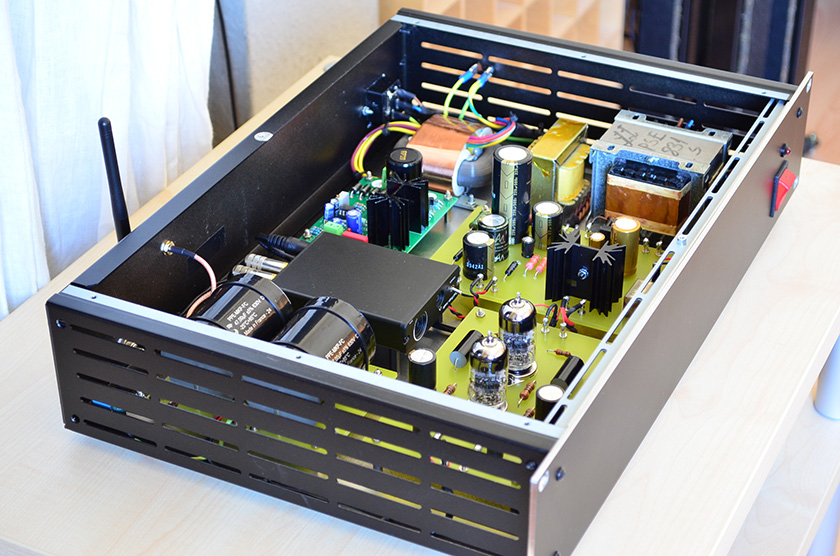
The modifications to the device itself consisted of removing all operational amplifiers, terminating the balanced current outputs of the digital-to-analog converter chip to ground with resistors for passive current-to-voltage (I/V) conversion and wiring them directly to the RCA sockets at the back. Further down the chain, via interconnect cables, the tiny signals were fed through a pair of coupling capacitors into a discrete low-pass filter before finally reaching the grids of the vacuum tubes located in the analog output stage. Sonically the outcome of that setup was revelatory. As a result, in the following months my listening habits became completely oriented towards streaming over Bluetooth instead of playing CDs or records. It was that good. Eventually I decided to put all the components together into a single enclosure and that’s how this project was born.
But let me tell you first how I reached the point where I was so familiar with my entire record collection that I didn’t want to listen to it anymore. It happened gradually, all I wanted then was something new. I wanted to be taken on a journey of discovery instead of following the old, beaten paths. At the same time I was trying to avoid complications imposed by adopting a typical streamer/DAC combo which requires local network, installing third party applications, dealing with authentication and so on in order to work. Bluetooth in contrast is not tied to a specific streaming service like Tidal or Qobuz for example but allows any content in the smartphone to be replayed on the audio system through simple pairing. And this includes audio/video content in the web browser which has a great deal on offer.
Eventually Bluetooth gave me the freedom and user-friendliness I was longing for, it liberated me from the tyranny of the physical media once and for all. Yes, it might sound absurd but being reliant on physical media to enjoy music has become a form of tyranny for me lately, mostly because of the constraints that a home record library imposes on one’s listening habits. I couldn’t afford enough variety which was limited due to lack of storage room on the one hand and the heavy burden on my wallet on the other. Finally with the introduction of a high performance Bluetooth receiver in my audio system all that changed.
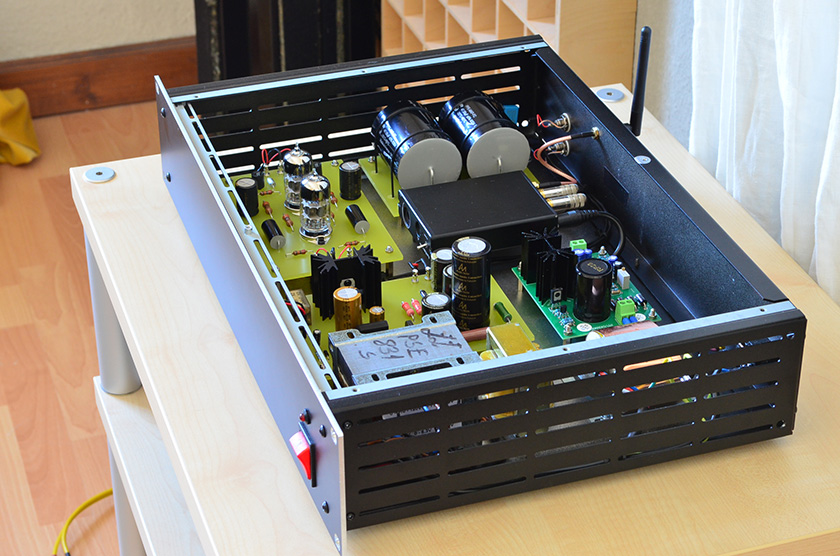
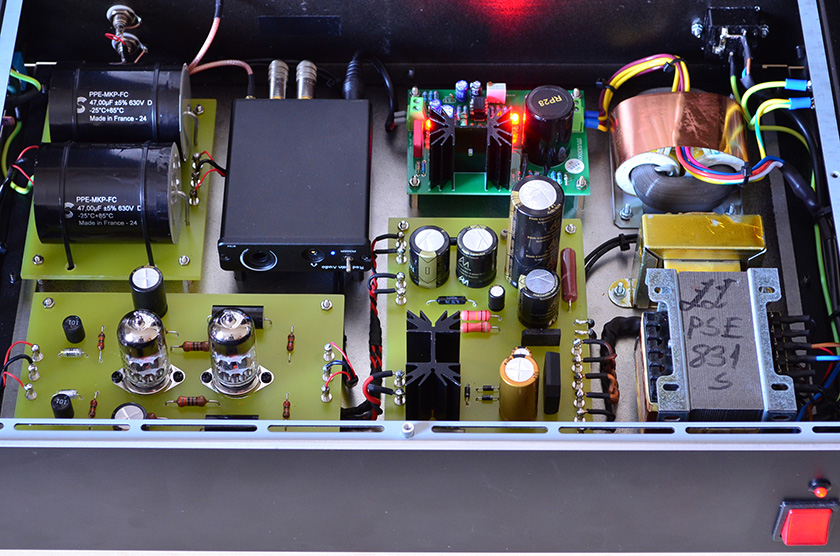
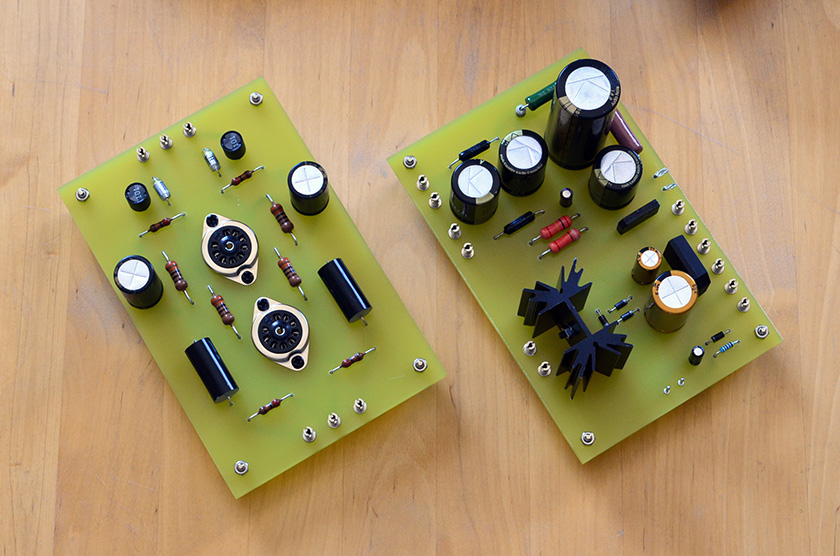
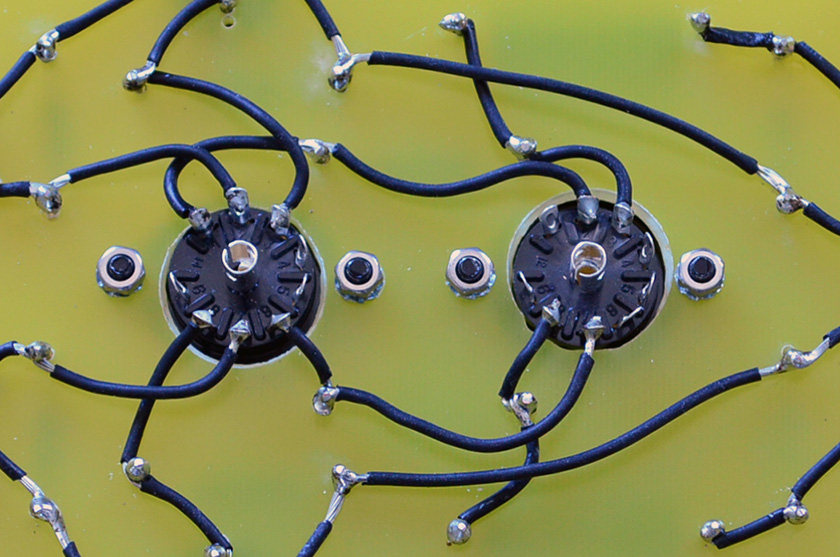
As I have previously mentioned, the largest part of the effort and expense went into building the output stage and its dedicated power supply both of which are hand wired. The analog output stage is based on ECC88/6922 tubes in an SRPP configuration derived from classic Audio Note DAC circuits that utilize the Burr-Brown PCM63 chip. The high-tension power supply relies on EI-type power transformer feeding a diode bridge rectifier, followed by a choke-input filter. The low-voltage digital power supply utilizes an R-core transformer and a high quality regulated power supply based on a TL072 dual operational amplifier as voltage reference processor. The Bluetooth receiver itself employs the Qualcomm QCC3095 chip supporting streaming at up to 24-bit/48 kHz resolution.
The selection of parts for this project has undergone a rigorous process. I spent countless hours trying different components in the key positions because everything matters – wires, resistors, capacitors, transformers, everything – each component leaves its own imprint on the final sonic result. Eventually I settled on a balanced mixture of parts that does not break the bank while maintaining a high level of quality: Audio Note tantalum resistors and SCR/Solen Fast film capacitors in the signal path, Mills wire-wound resistors and Audio Note standard electrolytic capacitors in the power supply, Nichicon Muse electrolytic capacitors and Takman carbon film resistors on different places.
All I can say is that the sound of this device is very balanced and extremely engaging. I use it mostly to stream music through the YouTube Music app from my smartphone with the Bluetooth audio codec set to Qualcomm aptX HD. To my ears this setup feels in no way inferior to a CD player or record player in terms of sheer resolution and most importantly my attention is immediately drawn towards the music and the performance instead. I have two friends who visit me regularly, both of whom use iPhones, one streams lossless audio from Tidal while the other enjoys to play self made recordings of concerts he has attended and I must say that both sources sound very convincing and we always have a great deal of enjoyment listening together. Especially unprocessed amateur recordings of live concerts, available on YouTube Music or elsewhere, have a striking immediacy and lifelike character when streamed through the receiver. They are remarkably effective at transporting me back to the concert venue. All in all, I am very satisfied with the sound.
Thank you for stopping by, and as always, happy listening!