It is time for tube rolling, dear fellows! Once the audio system is complete and the key components have been chosen, one should concentrate on the fine details. They usually do not bring dramatic improvements, but rather subtle refinements. My audio system recently reached such a stage. All the key components were in place, and I decided it was finally time to fine-tune it. Since the amplifier is the second most important component after the speakers it drives, it is worth getting the very best out of it.
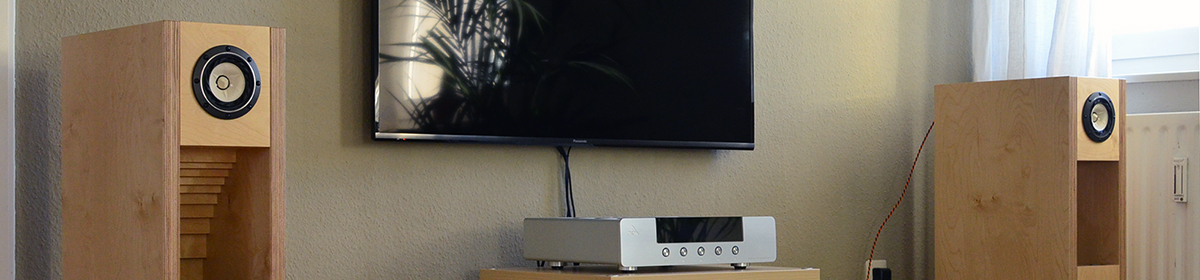
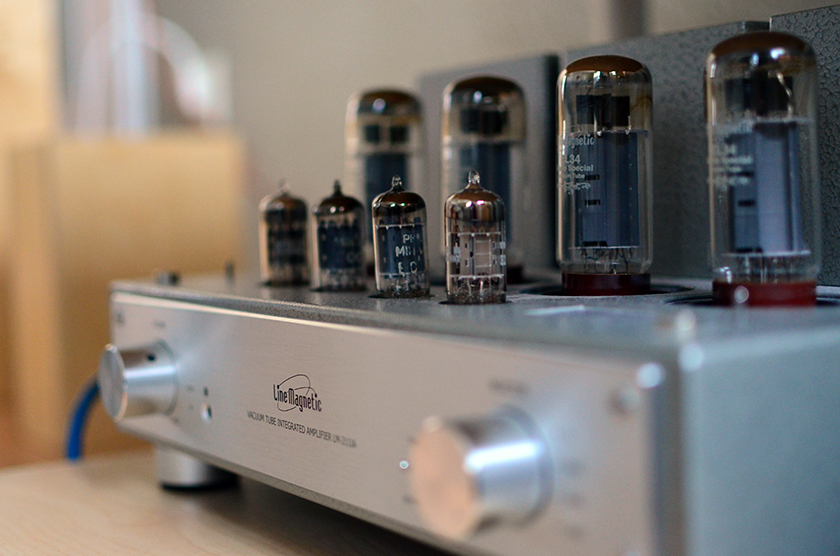
I own a valve amplifier produced by the Chinese manufacturer Line Magnetic Audio. It is a push-pull design based on EL34 output tubes. Connected to its 8-ohm output taps and operated in triode mode, my Fostex BK108 back-loaded horn speakers really come alive. With the introduction of the mighty LM-211IA in my system virtually every aspect of the sound has improved. Soundstage dimensions, the precision of performer placement, tonal colours, timbre, and texture have all become much more convincing. Transparency, detail, and dynamics have increased immensely, resulting in a much greater sense of realism.
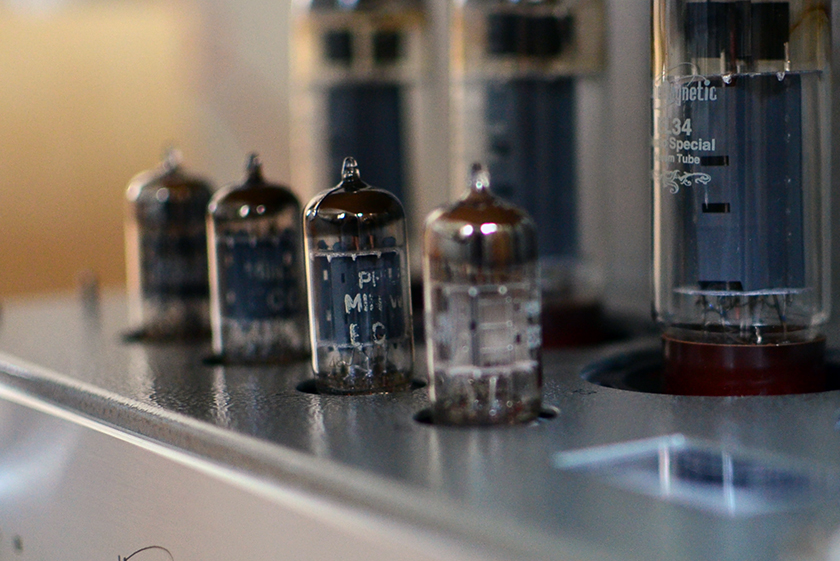
I could already tell that the LM-211IA performed very well with its stock tubes, but I had also been told that good old NOS tubes in the preamplifier stage could take it even further. I therefore decided to replace the ECC82/12AU7 and ECC83/12AX7 tubes used in the preamp section, as they were said to have the greatest influence on the amplifier’s performance.
Basically, there are two main groups of NOS tubes to consider. On the warm, vintage, and organic side are Mullard and Philips. On the other, associated with a more neutral, detailed, and modern presentation, are Telefunken and Siemens.
It was difficult to decide which direction to take, so I asked for advice. I then exchanged several emails with Ralph Wege of Wege High Fidelity, whose guidance proved invaluable. He recommended combining tubes from both groups in order to achieve a balanced and natural sound that is neither too warm nor too analytical. His suggestion was to use a warmer tube as the phase splitter (ECC82) and a more neutral one for the voltage amplification stage (ECC83), or vice versa.
As luck would have it, I came across a very rare matched pair of Philips Miniwatt ECC83 long plates from 1958 and decided to buy them. The ECC82 tubes are equally important because they serve as the phase splitter in the preamp stage. Shortly afterwards, I also purchased a matched pair of NOS Siemens ECC82 silver plates.
Replacing the stock ECC82 tubes with the Siemens pair brought an immediately noticeable improvement. The former haziness gave way to greater articulation and detail. The definition of individual notes improved considerably. The transients—those tiny fractions of a second during which a sound is born or fades away—became much better resolved than they had been with the stock Chinese tubes.
The Miniwatts were a different story. At first, I have to admit that they sounded rather rough and even slightly harsh. The overall presentation had what I would describe as a distinctly retro character. I was disappointed that, after spending a small fortune on them, they did not deliver what I had expected. I contacted Herr Wege once again. He explained that these really were genuine NOS tubes, meaning they had never been used and therefore required at least five days of operation before reaching their full potential. I followed his advice, leaving them running for several hours each day. After just two or three days, things had already improved considerably. After a week, it felt as though they had become completely different tubes. That was an important lesson: one should never judge a NOS tube before giving it enough time to open up.
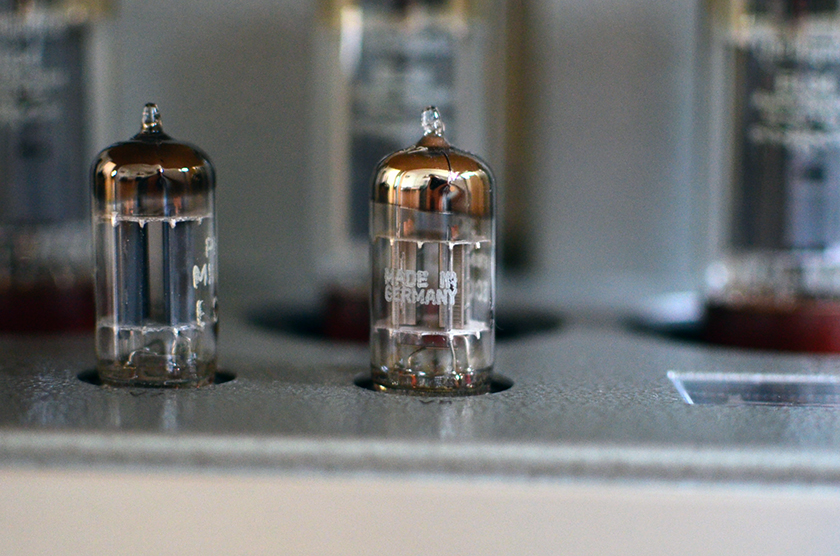
The Miniwatts sound fuller and bolder. The music has more body, while the bass is richer, deeper, and extends lower than before. In fact, it reaches depths I did not think possible with my speakers. Despite all these positive qualities, I initially felt that they might sacrifice a little detail because of their smoother presentation. After many hours of listening, swapping tubes back and forth, and comparing the speakers with my reference headphones, I realised that what I had mistaken for extra detail was actually a kind of graininess added by the cheap Chinese tubes. Alternatively, they were simply missing something that gives musical textures their natural, organic character. In the end, I found that the Miniwatts continued to improve over time. Today I am very satisfied with them and with the improvements this tube-rolling experiment has brought.
In conclusion, I have to say that replacing the stock tubes with carefully selected NOS tubes made a subtle but significant difference. The presentation changed from what had sometimes felt like a somewhat bodiless collection of sounds into something organic, richly textured, and remarkably lifelike. As the old saying goes, the devil is in the details, and that is certainly true when it comes to tube rolling. I would not recommend starting with it before the rest of the system has been carefully sorted out. Tube rolling should be left until the very end. Before that, it is far more important to find the cables that best suit your system within your budget. In particular, interconnects and speaker cables deserve careful attention before moving on to tube rolling.
Thank you for stopping by!
Hi Dimitar,
I’ve also made the move with LM211ia in Nov 2016. Coming from an A/V Amp (Cambridge Audio 340R) i could feel a HUUUGE difference with details. I’ve also upgraded my speakers from B&W 686 to CM6 S2. The CM6 are now in a run in process.
I’ve been screening the web on tubes rolling and i found really great infos on your post (thanks again for all this). My next move is to find (as you say) the right cables for my speaker and then i’ll start to search for different tubes. Heard of the 6CA7, i’ll need to « stabilize » my system first before making the big jump 🙂
I have one question regarding the Bias. Did you made anything specific on your Amp, or did it work with your NOS as a « plug’n’play » ? Can’t find any infos for our LM211ia.
Thank you for your answers.
Best from Paris.
Pierre
Hi Pierre, nice to have you here!
You are right LM-211IA is a hell of an amp that could frighten a lot of top-dog amplifiers. I am currently using it in Ultralinear mode, which outputs more drive and body through its 8 Ohm speaker taps.
I don’t think it is a good idea to start with rolling the output tubes (EL34/6CA7) because their impact on the sound is rather minimal compared to the small tubes (ECC82/12AU7 and ECC83/12AX7) in the preamplifier stage. In my opinion the stock Line Magnetic EL34 output tubes are quite good and does not make much sense to replace them, at least my experience says so. If anyway you decide to replace the output tubes, the bias current needs to be adjusted, otherwise rolling the preamplifier tubes does not require bias adjustment.
Regards,
Dimitar
Huh, I found swapping Mullards into the front end did very little, but the various power tube combos I swapped in each had a very pronounced effect. Tung-Sol el34b beat out tubestore preferred series, Svetlana el34, a set of JJ, and the stock units.
Thank you for sharing your experience Patrick! I guess the amount of the audible effect caused by swapping tubes in different amplifying stages, except of the tubes themselves, depends on the general system voicing, amplifier circuit and parts selection as well as on subjective criteria.
Great story about the LM211IA
I tried several ecc83 and 82 and like you ended up with the Philips and silver plate Siemens although the Brimar cv3004 (ecc82) works also very nicely, bit smoother in the mids
A big change was also replacing the stock tubes with the Groove Tubes EL 34m. Way more depth, smoother and a wider soundstage.
My speakers are Monitor Audio gold 100 4g which are very dynamic and a bit bright so I guess that’s why the EL 34m works so nicely. All about synergy..
Hello
I have had an unpleasant experience with a complete switch to EH on the 211iA
Replace the valves of the previous section with EH gold pins and also the output section with 6CA7 EH
Tired listening, headache, a mess.
I do not quite understand the reason, but for now I have returned to the original valves.
I’m not entirely happy, I think it lacks 3D depth in orchestras.
Now I am buying the Gold Lion pre-tubes.
We’ll see if that works better.
Anyone have experience with the GOLD LION at 211iA?
Greetings
Hi Ars,
I am sorry to hear you have been disappointed while tube rolling. I don’t have experience with Electro-Harmonix tubes other then with the 6BM8 which I find pretty decent. You can give some NOS tubes in the preamp/driver stage a chance. They are expensive and hard to find, but often surpass the new production in terms of quality.
Good luck,
Dimitar
Thanks Dimitar for your answer.
At the moment I am still listening better with the original tubes.
I have also tried the previous ones with Gold Lion, but they did not convince me, it is as if the magic disappeared.
Maybe I should also put the Gold Lion KT77, to see if the whole set sounds better.