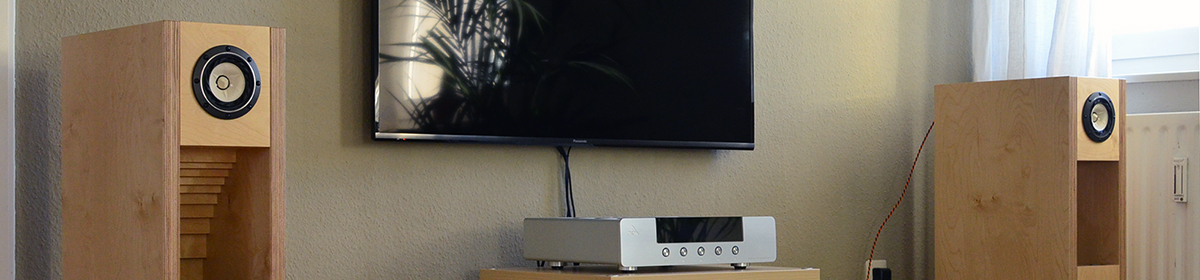

Convenience of use and playback performance were the main considerations that drew my attention to the idea of buying a dedicated network player to replace the PC I had been using. After researching the market for an affordable device capable of streaming digital audio over a local network or from attached USB storage, my choice was basically narrowed down to two contenders — the Auralic Aries Mini and the SOtM sMS-200, both priced below 600 euros. I decided to give SOtM a try because of its seemingly better build quality and greater versatility.
Category: First Steps
Do It Yourself (DIY)
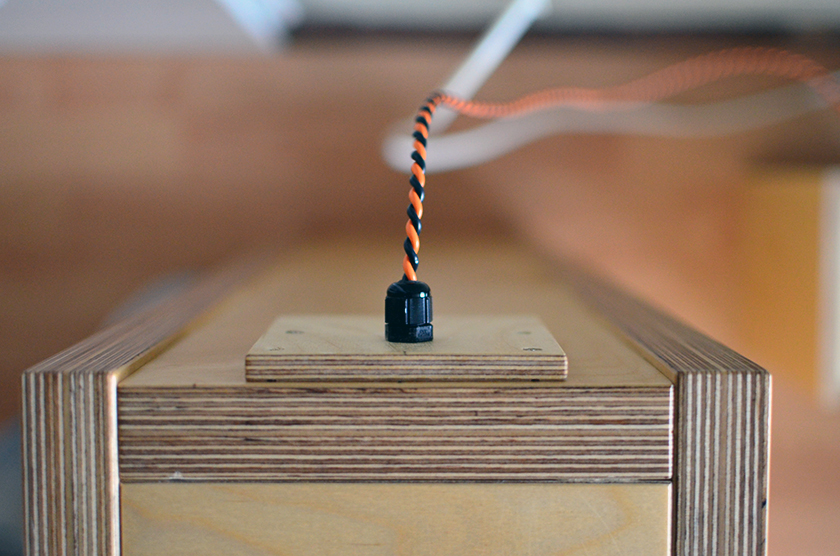
Over the last year, I have been involved in several DIY projects that I would like to briefly present. DIY is usually an inevitable part of the audiophile hobby, often driven by the urge to experiment and try unconventional concepts that are not normally part of mainstream commercial production aimed at larger market segments.
Speaker Placement
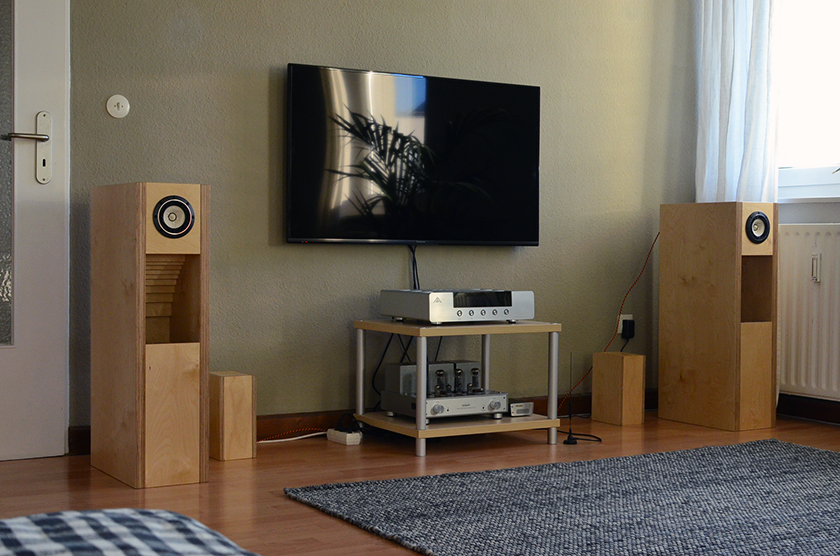
Proper speaker placement is one of the most important aspects of setting up an audio system. According to Jim Smith, the author of Get Better Sound, speaker placement alone accounts for 50% of the overall system performance. My own experience confirms that notion. The most important factors are the distance between the speakers, the distance from the speakers to the wall behind them, and the distance between the speakers and the listener. One should not compromise on the distance from the back wall. I believe that a minimum distance of 20 centimetres is necessary to achieve proper soundstage reproduction and the right tonal balance.
Rolling Tubes
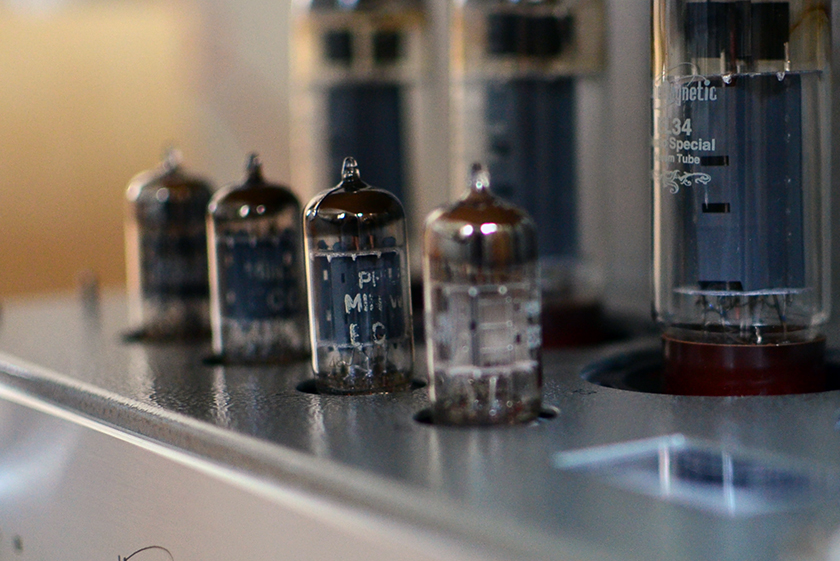
It is time for tube rolling, dear fellows! Once the audio system is complete and the key components have been chosen, one should concentrate on the fine details. They usually do not bring dramatic improvements, but rather subtle refinements. My audio system recently reached such a stage. All the key components were in place, and I decided it was finally time to fine-tune it. Since the amplifier is the second most important component after the speakers it drives, it is worth getting the very best out of it.
Notch Filter Experiment
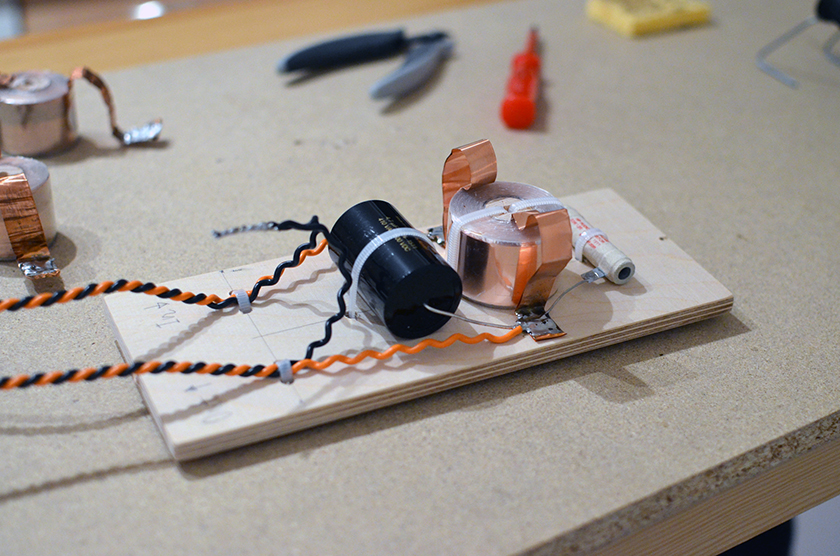
For those who do not know what a notch filter is, I will explain it briefly: the purpose of a notch filter is to reduce the strength of an audio signal within a certain frequency range. Such filters are often used in single-driver (also known as broadband or full-range) speaker designs. Because they have only one driver, it is often very difficult, or even impossible, for such speakers to achieve a perfectly flat response across the entire frequency spectrum. Usually, these speakers emphasise certain frequencies, which leads to tonal colourations.