
Sometimes I wonder what the meaning of all this endless chasing of the perfect sound is. Looking at it objectively, it is a pain. First of all, one has to put a lot of effort into acquiring the knowledge, because it requires hundreds of hours of reading and digging into the subject. Then come the hours of voluntary work spent modifying or creating components. I’ve spent weekends braiding cables, making custom wooden compartments for filters, adjusting speaker damping material, soldering cables, gluing and sanding wood, and so on. Sometimes I ask myself why I didn’t spend this time doing something more sensible.
Speaker Placement
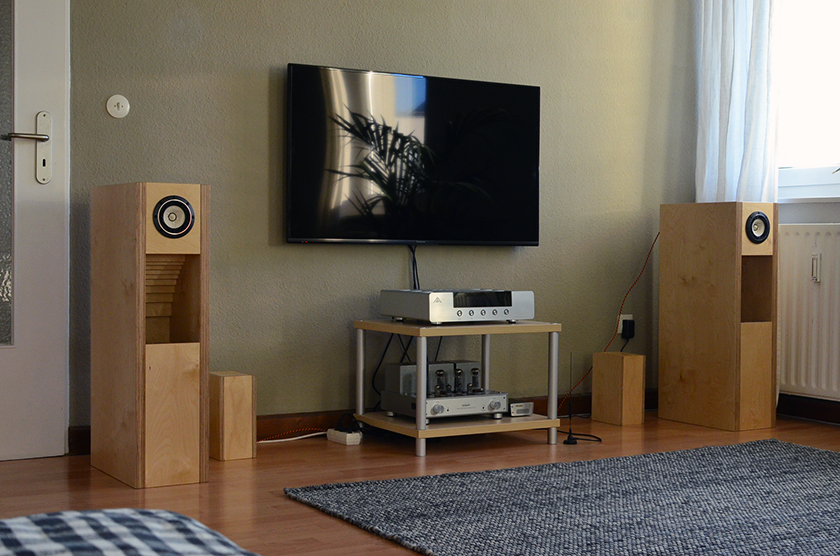
Proper speaker placement is one of the most important aspects of setting up an audio system. According to Jim Smith, the author of Get Better Sound, speaker placement alone accounts for 50% of the overall system performance. My own experience confirms that notion. The most important factors are the distance between the speakers, the distance from the speakers to the wall behind them, and the distance between the speakers and the listener. One should not compromise on the distance from the back wall. I believe that a minimum distance of 20 centimetres is necessary to achieve proper soundstage reproduction and the right tonal balance.
Rolling Tubes

It is time for tube rolling, dear fellows! Once the audio system is complete and the key components have been chosen, one should concentrate on the fine details. They usually do not bring dramatic improvements, but rather subtle refinements. My audio system recently reached such a stage. All the key components were in place, and I decided it was finally time to fine-tune it. Since the amplifier is the second most important component after the speakers it drives, it is worth getting the very best out of it.
Notch Filter Experiment
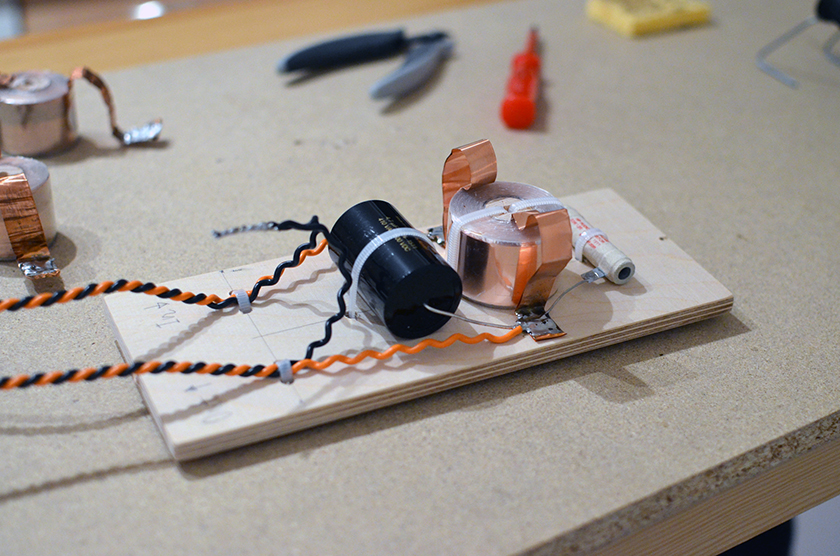
For those who do not know what a notch filter is, I will explain it briefly: the purpose of a notch filter is to reduce the strength of an audio signal within a certain frequency range. Such filters are often used in single-driver (also known as broadband or full-range) speaker designs. Because they have only one driver, it is often very difficult, or even impossible, for such speakers to achieve a perfectly flat response across the entire frequency spectrum. Usually, these speakers emphasise certain frequencies, which leads to tonal colourations.
Back at The Beginning

It is strange how often it happens that I change something in my audio system while experimenting and notice an improvement. I enjoy the achieved result for some time, but then I decide to restore the system to its initial state, only to realise that the so-called “improvement” is nothing more than an effect that actually moves the reproduction away from its authentic character.