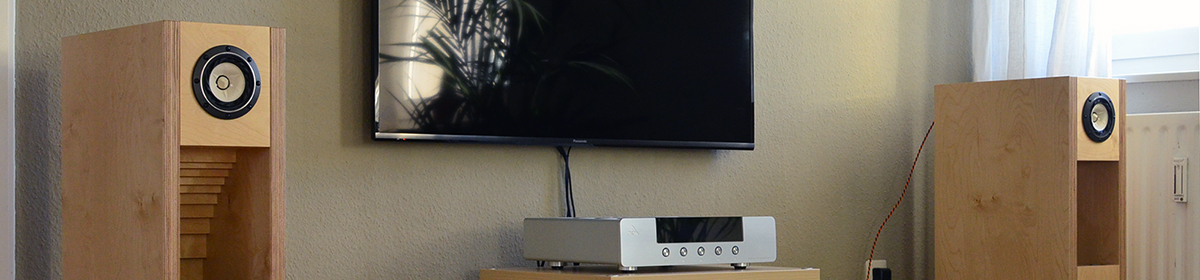
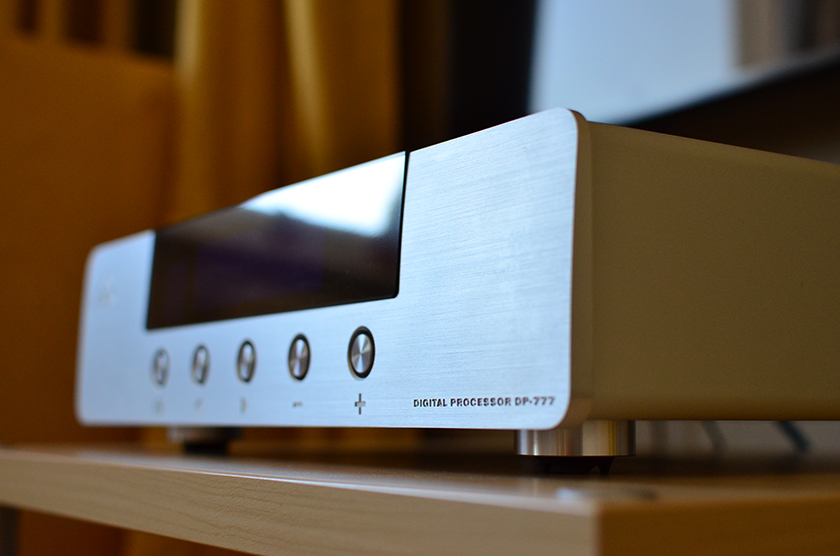
I’m going to wrap up my thoughts and impressions of the AMR DP-777 D/A converter, guys. Together with the SoTM sMS-200 network player, it forms the core of the digital front end in my audio chain.
As you may know, the SoTM sMS-200 transports digital data via a USB interface to the AMR DP-777 D/A converter, where it is converted into an analog signal before being passed on to the amplifier. Therefore, my observations are based entirely on AMR’s asynchronous USB digital input, which is only one of the five connectivity options this device offers.
I have always paid close attention to the source component in an audio chain, and what I expect from it is the delivery of an analog-like, organic flow of the information contained within a recording. Digital sources have often been criticized for sounding mechanical and uninvolving, particularly in their inability to convey the drama, drive, and momentum captured in a performance, or for causing listening fatigue during longer sessions.
At the same time, non-oversampling digital-to-analog converters have gained a reputation for offering an approach closer to the organic and natural character of traditional electromechanical transducers used for the reproduction of analog records. This is what eventually drew my interest in that direction.
During my search for a high-quality non-oversampling DAC with a tube output stage, I eventually came across a used AMR DP-777 on the second-hand market. I immediately seized the opportunity, as there are simply not many reasonably priced NOS D/A converters available with tube output stages.
One of the most obvious characteristics of this device is its versatility. It is clearly designed to cover the needs of a wide range of users rather than being tailored to a specific audience. The AMR DP-777 offers virtually all standard digital inputs—XLR, BNC, RCA, and Toslink S/PDIF, along with asynchronous USB.
It incorporates two separate processing chips: a 16-bit Philips UDA1305 dedicated to Red Book CD playback and a 32-bit Wolfson chip optimized for high-resolution files. It can also function as a conventional preamplifier when fed through its analog inputs. Additional features include an optional resistor-matrix-based analog volume control, a second pair of balanced XLR analog outputs, and a wide range of options for digital filtering and sampling rates.
The interesting thing is that it took me almost a year to realize that I was using no more than one-third of the functionality built into this machine. Since I use an integrated amplifier, I have no need for the preamplifier section. I also prefer the classic 16-bit non-oversampling Philips chip over the 32-bit Wolfson solution, as I simply find CD-quality playback more convincing than the high-resolution versions of the same material.
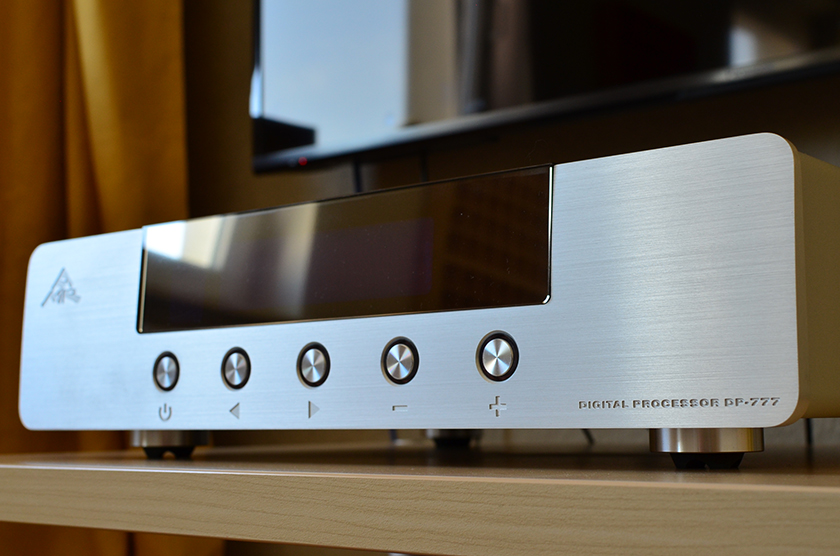
In practice, I use only the asynchronous USB input and the standard single-ended analog outputs.
So, in effect, I have bypassed the preamplifier function, I rely exclusively on the classic 16-bit DAC without analog filtering, I never use the remote control, and I have little need for the display. This leads me to believe that a simplified version of this DAC — without the preamp section, high-resolution 32-bit processor, remote control, and display — would have suited my needs perfectly while reducing cost by removing functionality I do not require.
That is why I believe there is a niche for an affordable, non-oversampling multibit DAC with a tube output stage.
One of the first things I did after acquiring the AMR DP-777 was determine which of its two processors served the music best. With the default Auto DAC Select function enabled, the AMR intelligently chooses the appropriate DAC depending on the source material: files with 44.1 or 48 kHz sampling rates are handled by the Classic 16-Bit DAC, while files at 88.2 kHz and above are assigned to the HD 32-Bit DAC.
After comparing 16-bit/44.1 kHz and 24-bit/96 kHz versions of the same recordings, it quickly became clear that the non-oversampling, 16-bit Philips processor was the far more convincing performer.
When listening to Keith Jarrett’s The Köln Concert in its Hi-Res version, for example, the HD DAC, despite the higher bit depth and sampling rate, sounded surprisingly artificial. It reminded me that I was listening to a hi-fi system rather than experiencing a live performance. Switching between the available digital filters did not change this overall impression; it merely altered the seasoning.
By contrast, the CD-quality version of the same album revealed the artistic touch of Keith’s fingers, the physical presence of the piano, and the applause of the audience with a remarkably realistic and satisfying portrayal of the event.
These impressions were confirmed with other albums in different file resolutions, and it was not long before I abandoned the idea of using Hi-Res files with the AMR DP-777.
To make a long story short, I would say that without the old 16-bit Philips chip, the AMR DP-777 would have remained just another product capable of producing sound rather than creating a convincing illusion of life.
In my experience, when fed with properly mastered CD-quality material and set to the so-called Bit-Perfect I mode, which avoids both digital and analog filtering in order to preserve data integrity, this machine truly shines with an exceptionally believable presentation.
The speed of its transients is such that there is no doubt that a string has been plucked or that the skin of a drum has been struck with a bare hand. I believe this performance is rooted in the time-domain accuracy of the signal, which is handled with remarkable speed and precision.
However, when switching to the second operating mode, Bit-Perfect II, the magic disappears. Something feels fundamentally different, and instead of hearing musical instruments, I become aware of the loudspeakers reproducing them.
It seems to me that the analog filtering stage introduced in Bit-Perfect II, intended to compensate for the slight treble roll-off, softens the transients by introducing a small amount of ringing. To my ears, this is detrimental and ultimately unacceptable.
It reinforces my belief that keeping the signal path as short as possible and avoiding unnecessary obstacles along the way is always beneficial.
Conclusion
There is no question that an even higher level of realism could be achieved through richer textures, more saturated tonal colours, and a wider spatial presentation — qualities that a high-resolution analog setup can extract from vinyl grooves.
However, what the AMR DP-777 achieves in certain areas of reproduction, it does with an aplomb that is genuinely impressive.
Paired with a capable streamer, it provides a highly convenient and user-friendly experience. Nevertheless, I suspect that connecting a quality CD transport through one of its S/PDIF inputs, which benefit from a dedicated circuit based around a high-speed NOS 6N11 valve, could elevate performance even further.
The drive and momentum that a spinning disc can bring during real-time conversion should not be underestimated. Physical media has always been, and remains, a reference point. Therefore, for those seeking the highest possible quality, this may still be the path worth exploring.
Thank you for stopping by, and as always, happy listening!